Work Backwards Freestyle | Panorama Ukraine

Research

Status: Ongoing collaborative project. More information will follow soon.

The destruction of the Kakhovka Dam and the resulting environmental and humanitarian disaster stand as a devastating tragedy today. It is crucial to recognise that the construction of the very same dam was equally a great tragedy. This area, once abundant with productive marshes (a biodiverse and complex system of animals, plants, birds, fish, and other aquatic species), transformed into a place where political powers assumed a new form — the knowledge and command of space.
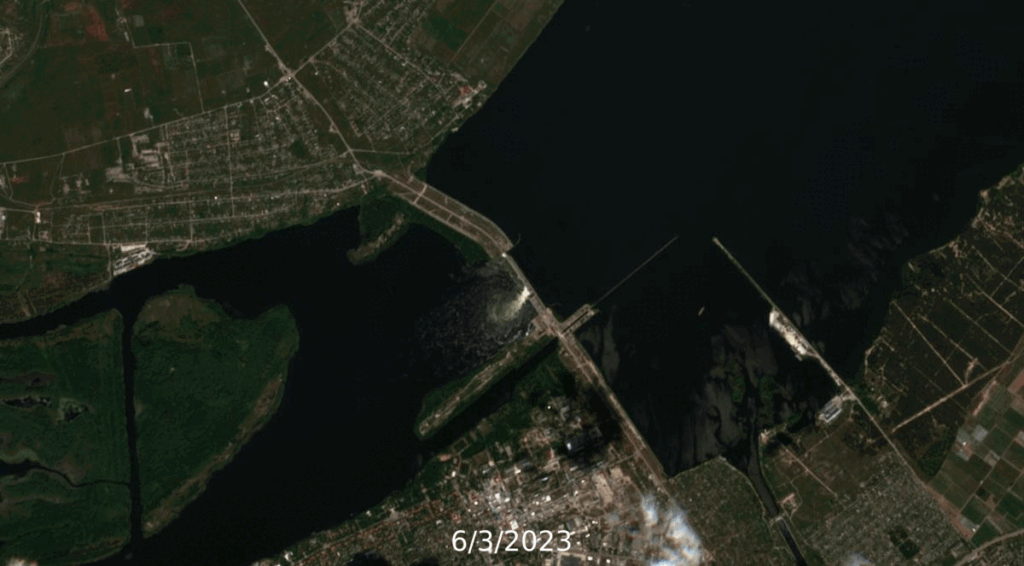
The Kakhovka Dam is a manifestation of Stalin's "Great Plan for the Transformation of Nature," which aimed at fully changing the physical environment for regime developmental purposes and establishing control over the previously 'uncontrollable' territory. Ironically, the destruction of the Kakhovka Dam by the Russian Forces in 2023 serves as a metaphor for the dismantling of their own system of centuries of control.

With the breach of the Kakhovka Dam, not only did sediment of historical relics and memories emerge, but also centuries of traumas, simultaneously revealing 2000 square kilometres of the former underwater significant archaeological sites crucial to Ukrainian history. Moreover, despite the widespread devastation caused by the dam breach, some environmentalists argue against the reconstruction of the Kakhovka Dam, deeming it "inefficient" and detrimental to the environment.

Landscapes are reconstructed in response to people’s changing definitions of themselves and the world. 

How can we manifest through space the new period of a Free Ukraine, which is not based on control but on the recognition of freedom and the rights of humans and beyond humans? How can design tools be employed to subvert existing systems of colonialism, capitalism, and control, replacing them with structures based on the principles of togetherness, coexistence with nature, and its dynamics?
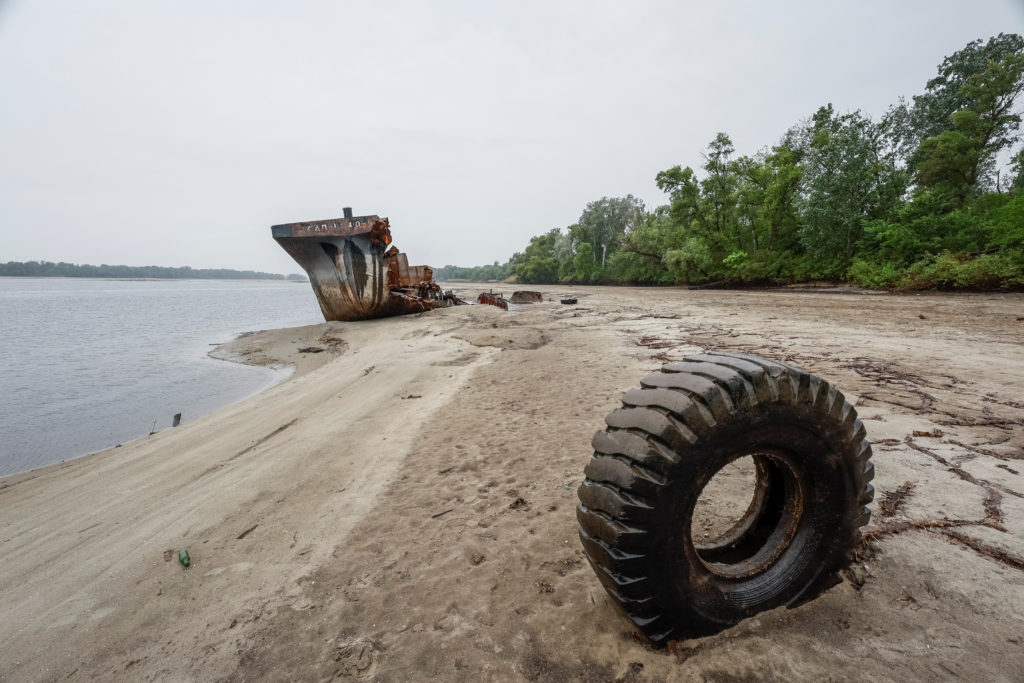
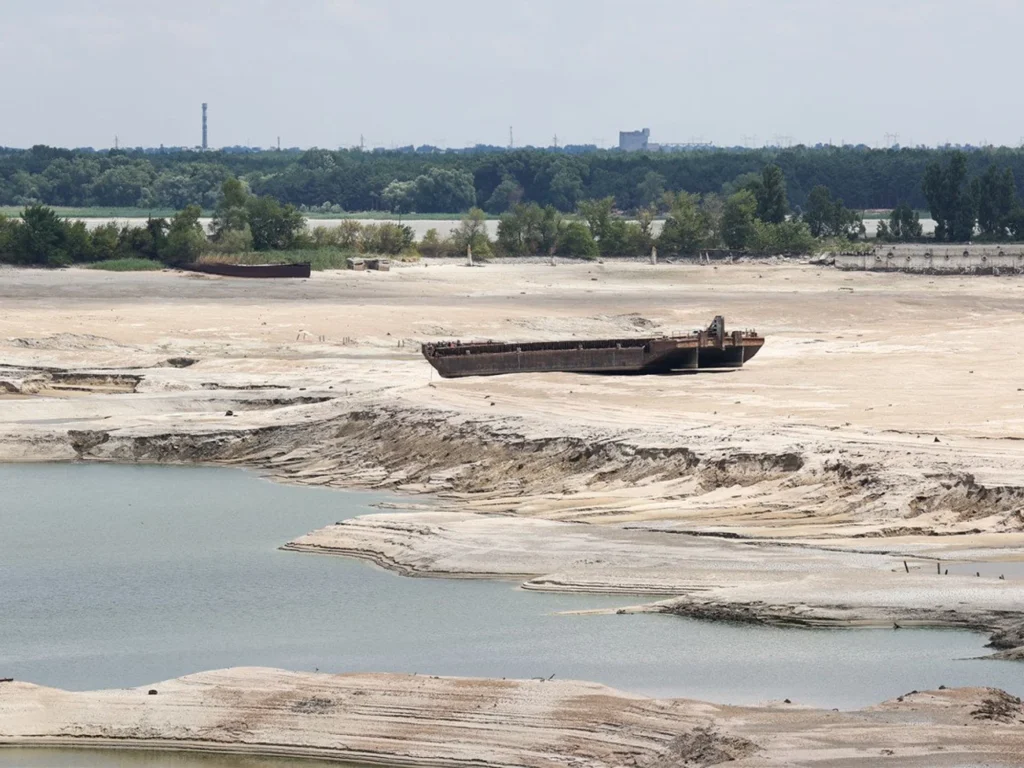
An old barge seen on a dried-up river bank after a water level in Dnipro river sharply dropped, after Kakhovka dam destruction, amid Russia's attack on Ukraine, near Zaporizhzhia, Ukraine, June 11, 2023. REUTERS/Alina Smutko

Project

Biography

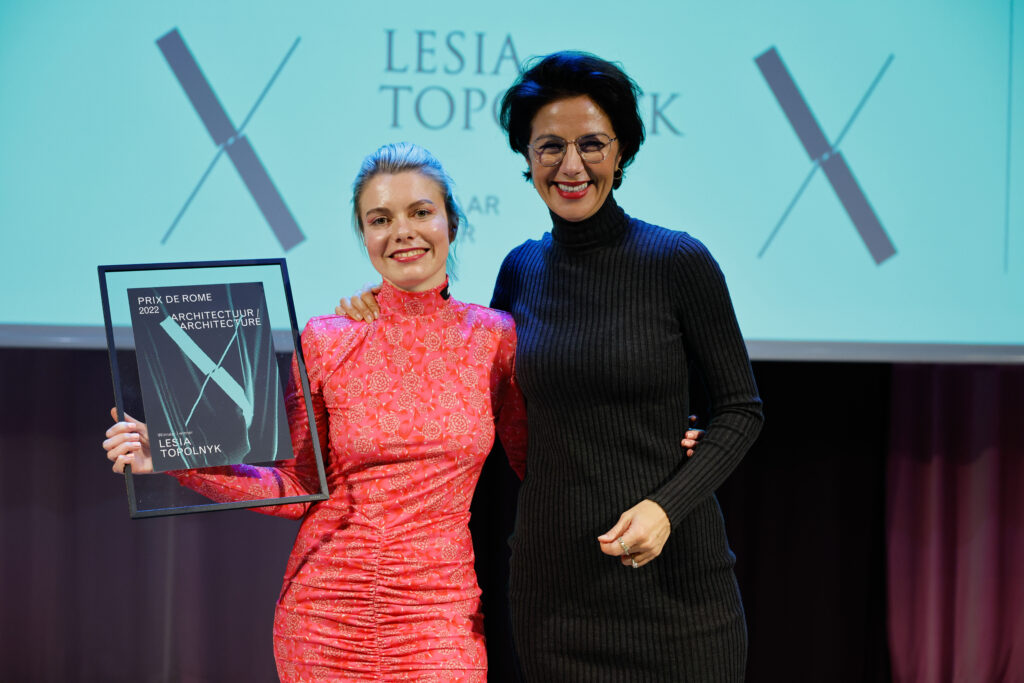
The Prix de Rome is the oldest and most prestigious Dutch award for visual artists and architects below the age of 35.

Lesia's work has been published in ArchDaily, E-Flux, STIRworld, NRC, Het Financieele Dagblad Persoonlijk, Metropolis, Mister Motley, Blauwe Kamer, AD, and more.

Honors & Awards:

2024 - Residency at The Savannah Centre for Contemporary Art (SCCA) and Studio of Ibrahim Mahama (Red Clay), Ghana

2024 - Residency on Governors Island, New York

2023 - IABR Agent of Change

2023 - Financieele Dagblad Top 50 Talent 2023

2022 - Winner Prix de Rome, the Netherlands

2020 - Talent Grant, Creative Industries, Netherlands

2020 - Young Talent Architecture Award, nomination (by the Fundació Mies van der Rohe and the EU Commission)

2019 - Winner Archiprix Nederland

2019 - Winner Archiprix International

2019 - Winner Tamayouz International Award

2014 - AHK Talent Grant

Selected Exhibitions:

2025 - Solo exhibition at MAGAZIN, Vienna, Austria (upcoming)

2025 - Lisbon Architecture Triennale, Portugal

2024 - Work presentation at RedClay (Studio of Ibrahim Mahama), Ghana

2024 - Mobile installation, exhibition, Governors Island - Lower Manhattan, New York

2024 - OMI, "Rotterdam Culture City", alongside significant works by OMA and West 8.

2024 - International Architecture Biennale Rotterdam (IABR)

2022 - Prix de Rome, NI, Rotterdam

2022 - Architecture Triennale, Lisbon

2022 - New European Bauhaus, Brussels

2021 - Dutch Design Week

2021 - Biennale, Venice

2020 - Dutch Design Week

2019 - Biennale, Santiago

2019 - Archiprix International

2019 - Archiprix Netherlands

Portrait for Prix de Rome 2022

Lesia Topolnyk is an architect who pushes the boundaries of her field, exploring architecture’s role beyond the act of building. Her goal is to foster a holistic perspective and stimulate systemic transformation. Rather than simply creating structures, she is deeply invested in the potential of architecture within our constructed reality—whether physical, social, or political. "It's about ideas that take shape during the research and design process, generating new typologies," she explains. For her, architecture is not a reactive discipline but a tool for reshaping the world by questioning its existing frameworks. "Architects are often seen as designers of spaces, but we also design relationships. Especially in these turbulent political times, it is crucial to examine how the world itself is designed to understand the larger forces at play. Sometimes, I reflect on major global issues; at other times, I focus on the space inside someone's mind.”

Lesia founded Studio Space Station to tackle urgent societal and planetary challenges beyond the traditional scope of architecture, bridging global and local perspectives. She uses spatial tools to shape ideas, uncover hidden narratives, and forge new relationships—whether through installations, interventions, architecture, or film. Rooted in deep research, each project uniquely responds to its context, provoking thought, stirring emotion, and sparking dialogue. Her approach to architecture, art, and design is fundamentally collaborative, drawing on diverse perspectives and expertise. She actively works across disciplines, believing that "you can learn from others, and they bring valuable insights and viewpoints.”

Lesia effortlessly navigates between different scales and realities, having studied art and holding master’s degrees in Architecture (NL), Urban Planning (PL), and Environmental Design (UA). She also has a decade of experience working at internationally renowned architecture practices. Her work has received numerous Dutch and international awards and has been exhibited and published worldwide. She also teaches and lectures in the Netherlands and abroad.

For her final project at the Academy of Architecture in Amsterdam, Topolnyk, who grew up in Ukraine, addressed the situation in Crimea, proposing a building that serves as a counterpart to the United Nations Headquarters—UnUnited Nations Headquarters—exploring architecture’s role in absorbing conflict within a divided society. For this work, Lesia received both the Archiprix Netherlands and Archiprix International awards.

Her Prix de Rome-winning project, No Innocent Landscape, expands on this vision, exploring how architecture can operate in politically contested territories, using spatial interventions to navigate instability and create new narratives. Through speculative research and design, she examines architecture’s role in decision-making and power structures, revealing the invisible forces that shape our built environment.

Lesia's current research, extending to sites in the Netherlands, Africa, and New York, focuses on the crises shaping our world, with a particular interest in how governance has historically been designed and how architecture has supported, symbolised, and shaped these systems. "It’s about how we can design change and how we can govern the world better together," she concludes. For her, architecture is not just about constructing spaces—it is about constructing possibilities.

Text: Vincent van Velsen

About / Contact