Type: Vision, Spatial Design, Curatorial Framework Client: Municipality of ‘s-Hertogenbosch, The Board of Government Advisors (CRa) Location: Den Bosch, region of The Line 1629, The Netherlands Year: 2023 - ongoing
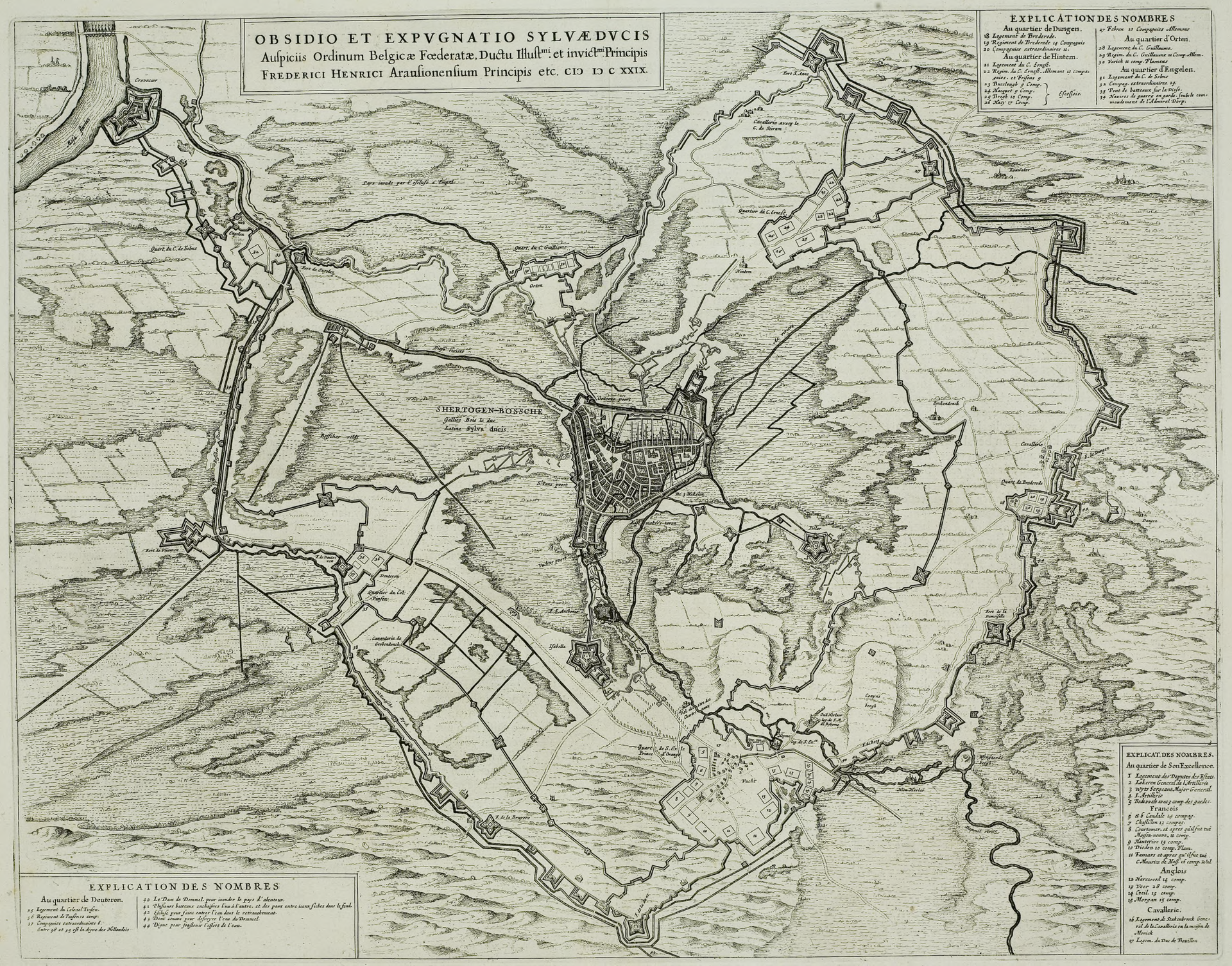
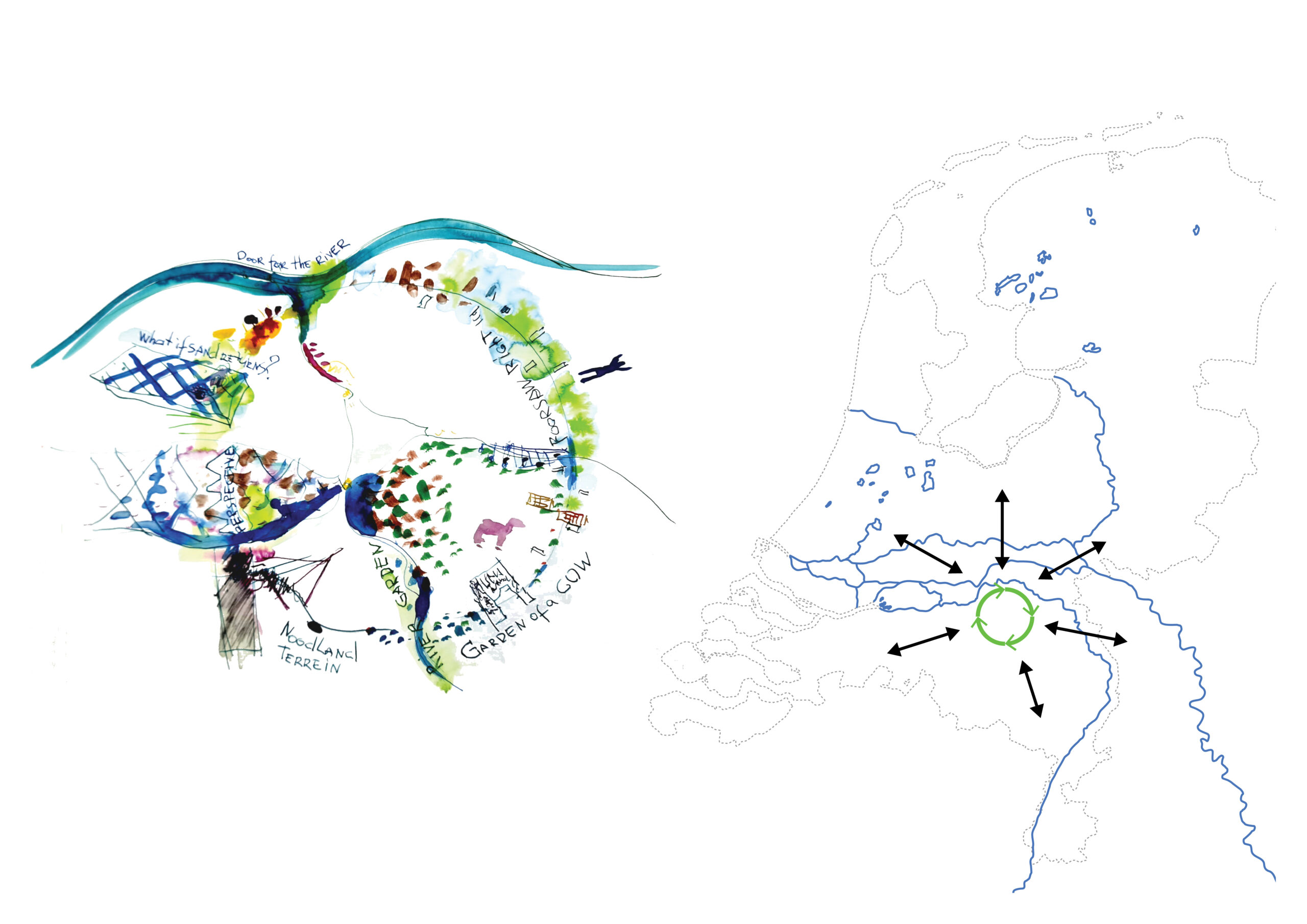
Linie 1629 — the dike and fortification system surrounding 's-Hertogenbosch, commissioned by Frederik Hendrik to drain the marshland and besiege the city. Nearly 400 years later, its traces remain visible in the landscape.
Manifesto for Line 2029 of ‘s-Hertogenbosch: A Dual Perspective of 400 years Backward and Forward.
In 1629, Frederik Hendrik ordered the construction of an enormous dike system to drain the marshland surrounding 's-Hertogenbosch.
The Linie 1629 was more than a military intervention. It embodied humanity's desire to control nature — with far-reaching consequences for landscape, water, and food production. Today, this system remains visible in the landscape. A silent witness to how we shape the land.
But the present moment calls for more than looking back. It calls for looking forward.
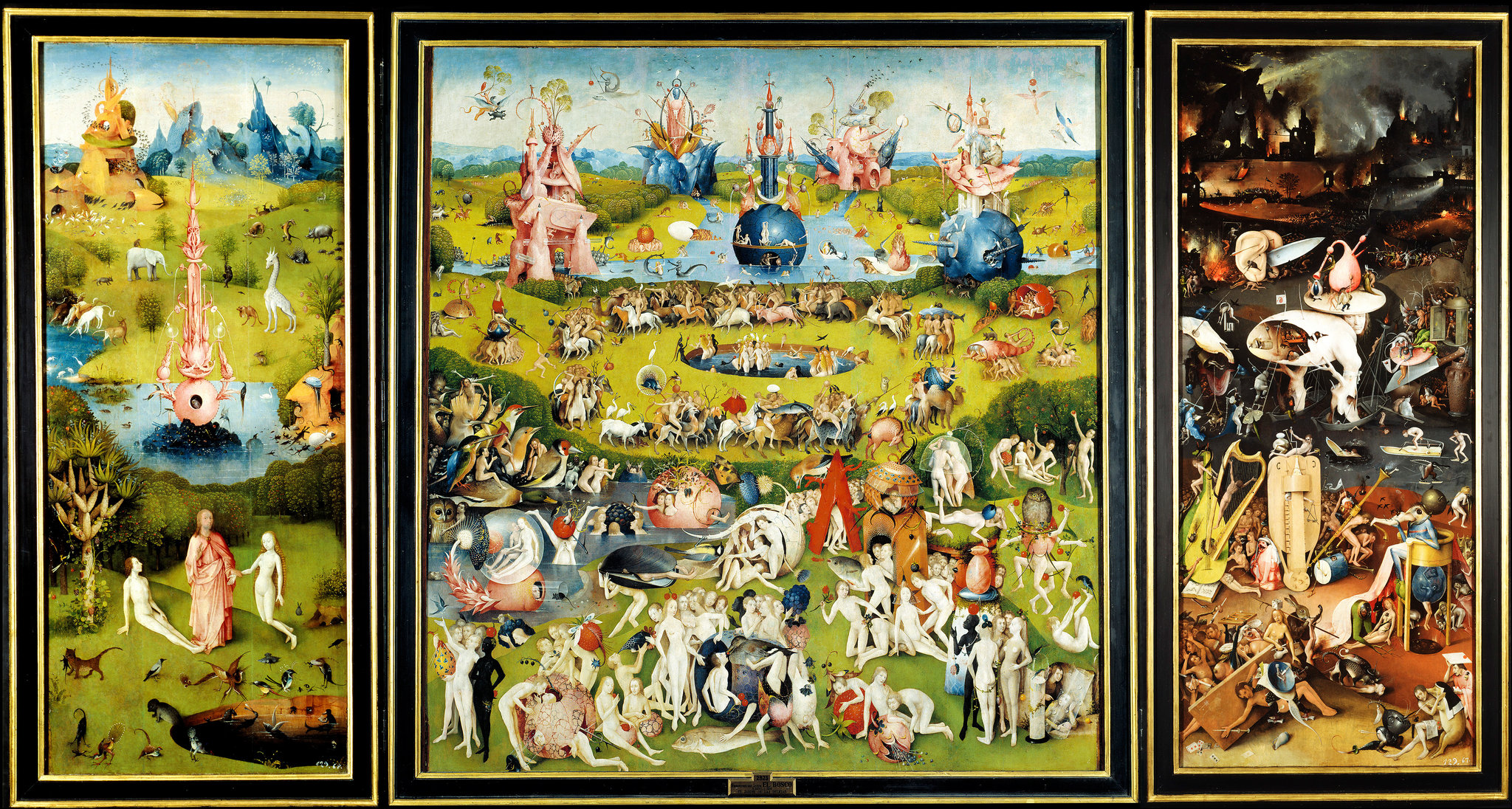
That is why in 2029 we are adding a new layer: the Gardens of Earthly Delights. Inspired by Jheronimus Bosch, but rooted in the soil of today.
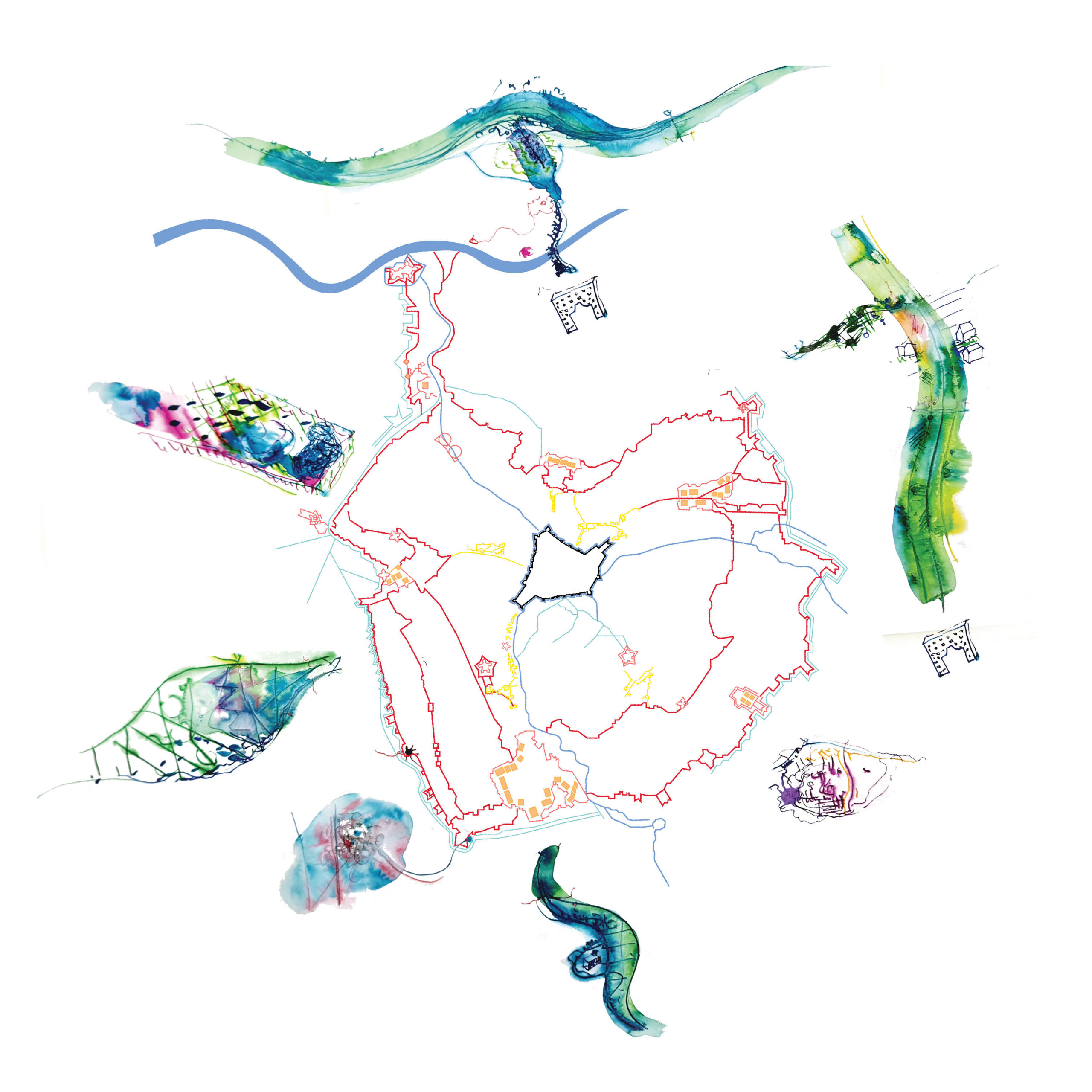
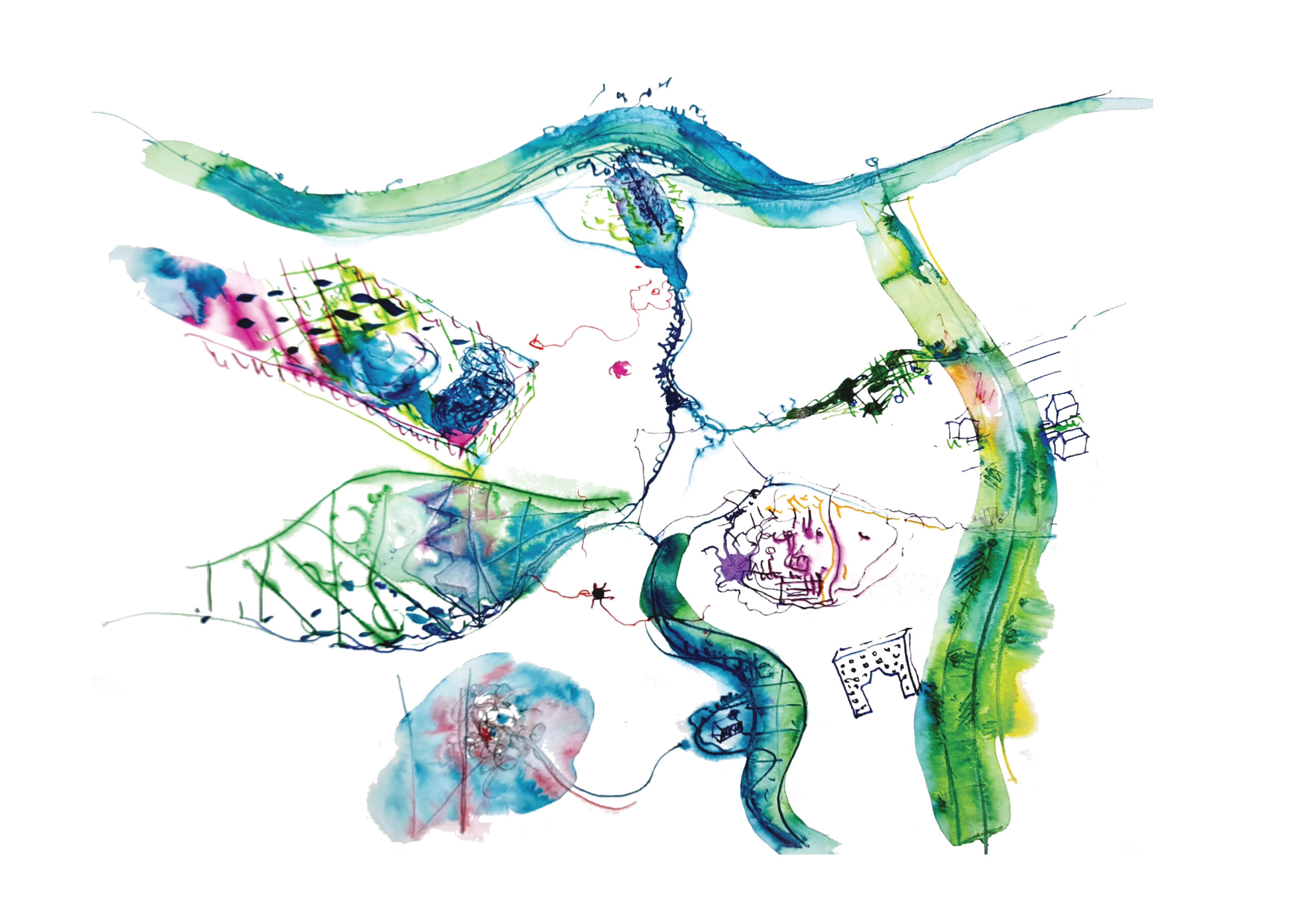
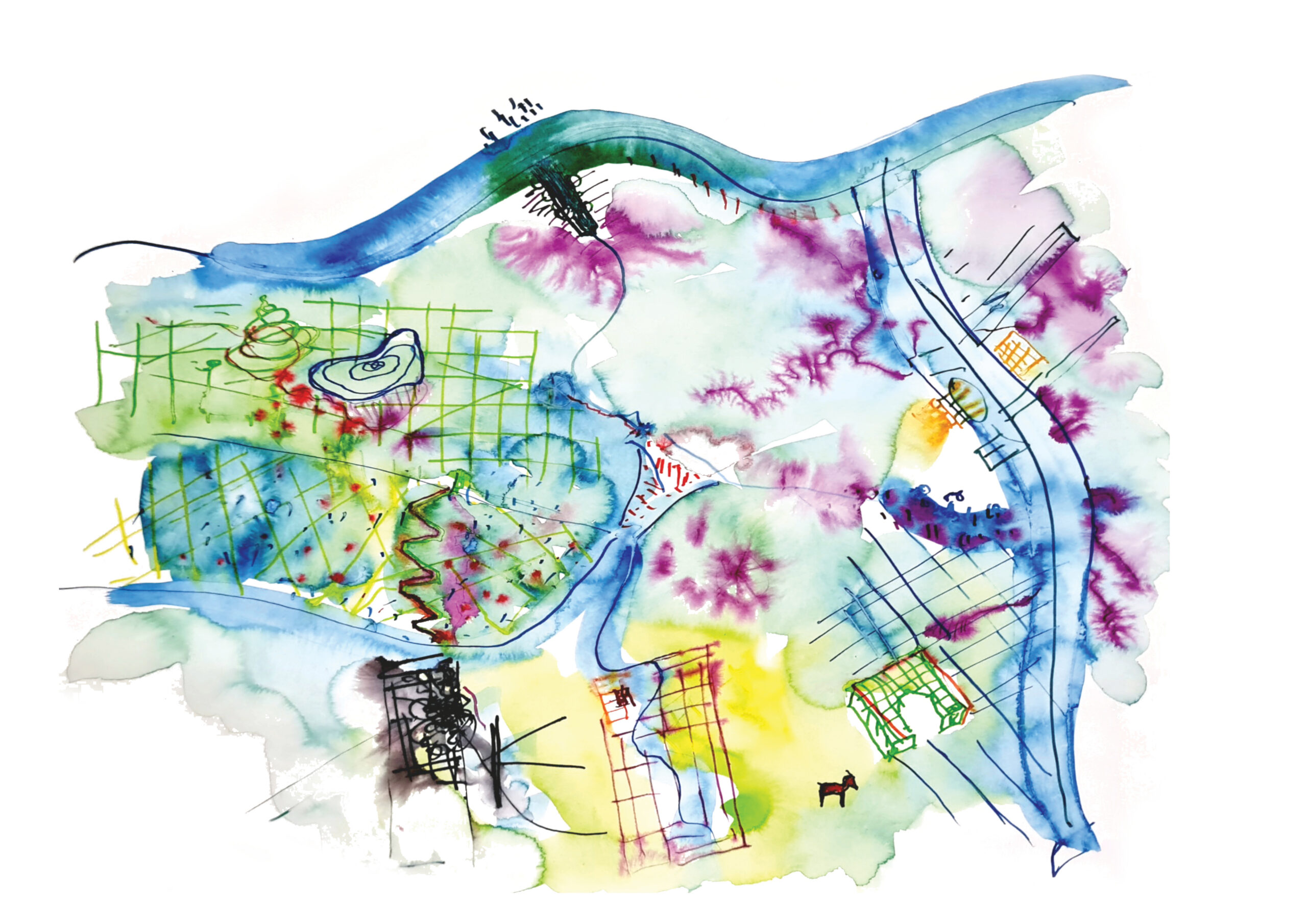
Along the Linie, experimental gardens take shape — places where we investigate the challenges of our time: water and drought, food, economy — and the soil as a conversation partner.
The Gardens of Earthly Delights together form a chain of places, connected by the Linie 1629.
A panorama of a learning landscape. A laboratory for the future of 's-Hertogenbosch.
It provides space for investigative, innovative initiatives, connects the city with its surroundings, and underscores its role as a UNESCO City of Lifelong Learning.
Open. Growing. And never finished.
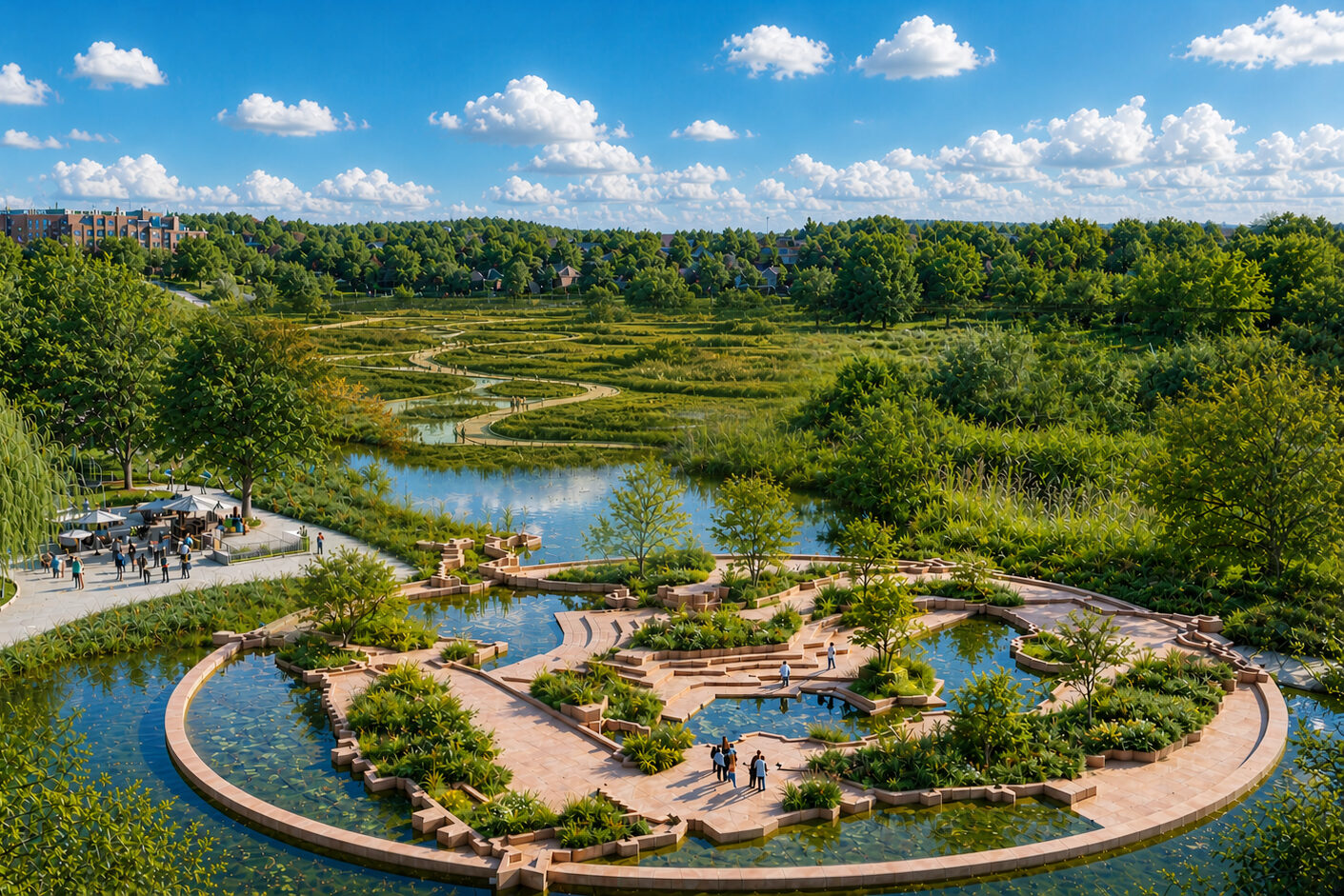
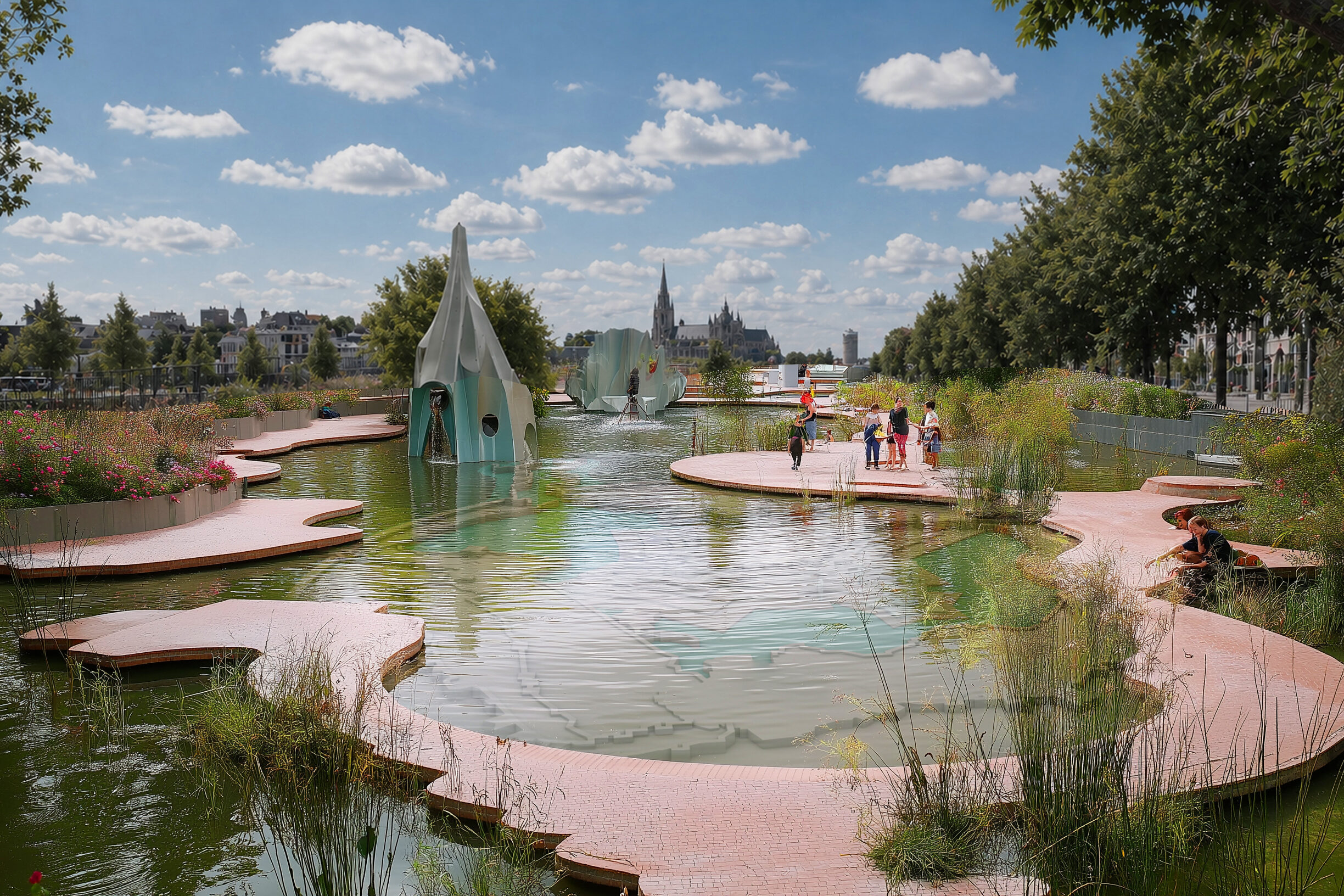
One of the Gardens: Water Experience Garden — a multifunctional site where water becomes something you can see, touch, and understand.
Water plays a central role. The Meierij is vulnerable: too wet, and at the same time increasingly too dry. Municipalities, the province, and water boards are working on areas where water can be stored — for protection and as a reserve.
At one of these sites, we aim to realise a water experience garden: a place where you discover how water works, how we can give it space — and what happens when it disappears.
Project
Biography
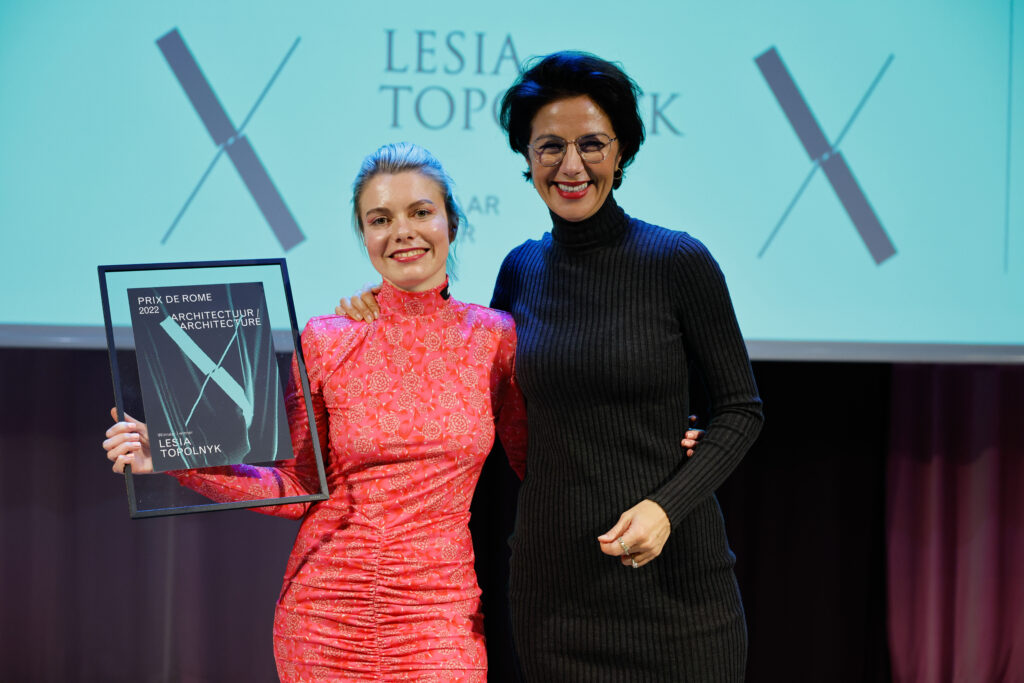
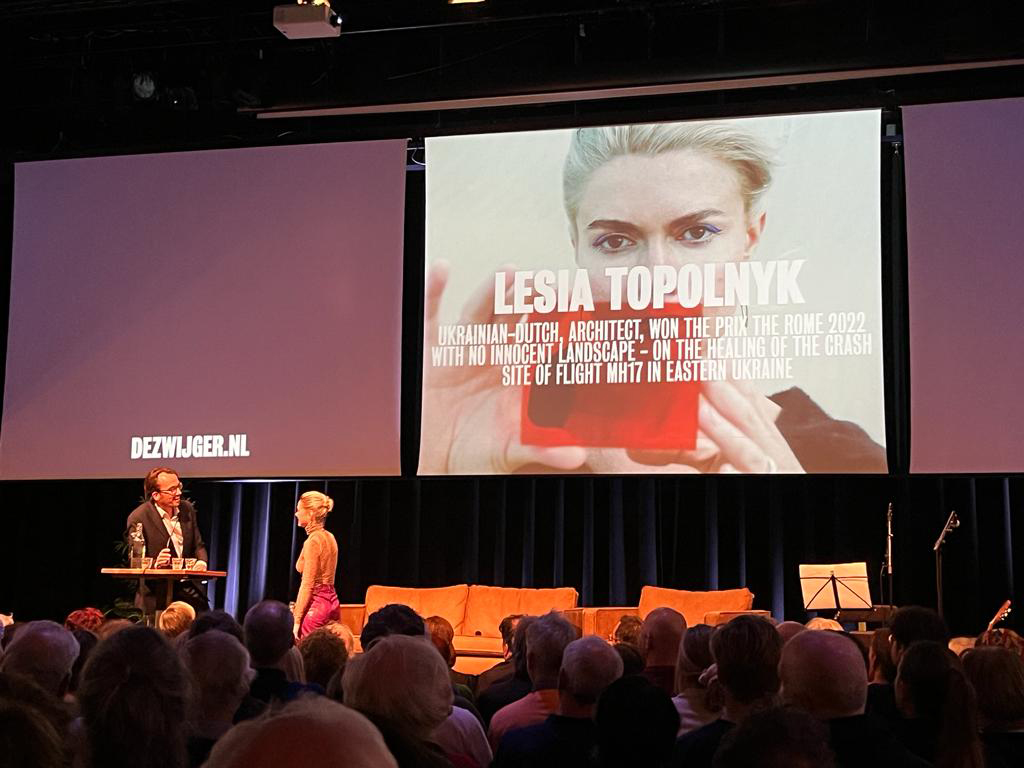
The Prix de Rome is the oldest and most prestigious Dutch award for visual artists and architects below the age of 35.
Lesia's work has been published in ArchDaily, E-Flux, STIRworld, NRC, Het Financieele Dagblad Persoonlijk, Metropolis, Mister Motley, Blauwe Kamer, AD, and more.
Honors & Awards:
2024 - Residency at The Savannah Centre for Contemporary Art (SCCA) and Studio of Ibrahim Mahama (Red Clay), Ghana
2025 - Solo exhibition at MAGAZIN, Vienna, Austria (upcoming)
2025 - Lisbon Architecture Triennale, Portugal
2024 - Work presentation at RedClay (Studio of Ibrahim Mahama), Ghana
2024 - Mobile installation, exhibition, Governors Island - Lower Manhattan, New York
2024 - OMI, "Rotterdam Culture City", alongside significant works by OMA and West 8.
2024 - International Architecture Biennale Rotterdam (IABR)
2022 - Prix de Rome, NI, Rotterdam
2022 - Architecture Triennale, Lisbon
2022 - New European Bauhaus, Brussels
2021 - Dutch Design Week
2021 - Biennale, Venice
2020 - Dutch Design Week
2019 - Biennale, Santiago
2019 - Archiprix International
2019 - Archiprix Netherlands
Portrait for Prix de Rome 2022
Lesia Topolnyk is a licensed architect and recipient of numerous Dutch and international awards for design and research — including the Prix de Rome and Archiprix. Named an agent of change by the International Architecture Biannale Rotterdam for her work on energy transition and places that require a new vision, she brings more than ten years of experience working at internationally acclaimed Dutch practices. Her projects span the Netherlands, New York, North Africa, and her native Ukraine.
Her practice operates across two registers: spatial design — buildings, interventions, interiors — and strategic research consultancy for municipalities, developers, and NGOs engaged with transition themes including energy, landscape, and heritage. The two are not separate disciplines but a single sensibility applied at different scales and in different forms of collaboration. Her work does not stop at the building — it contributes to the shaping of the spaces and systems we inhabit.