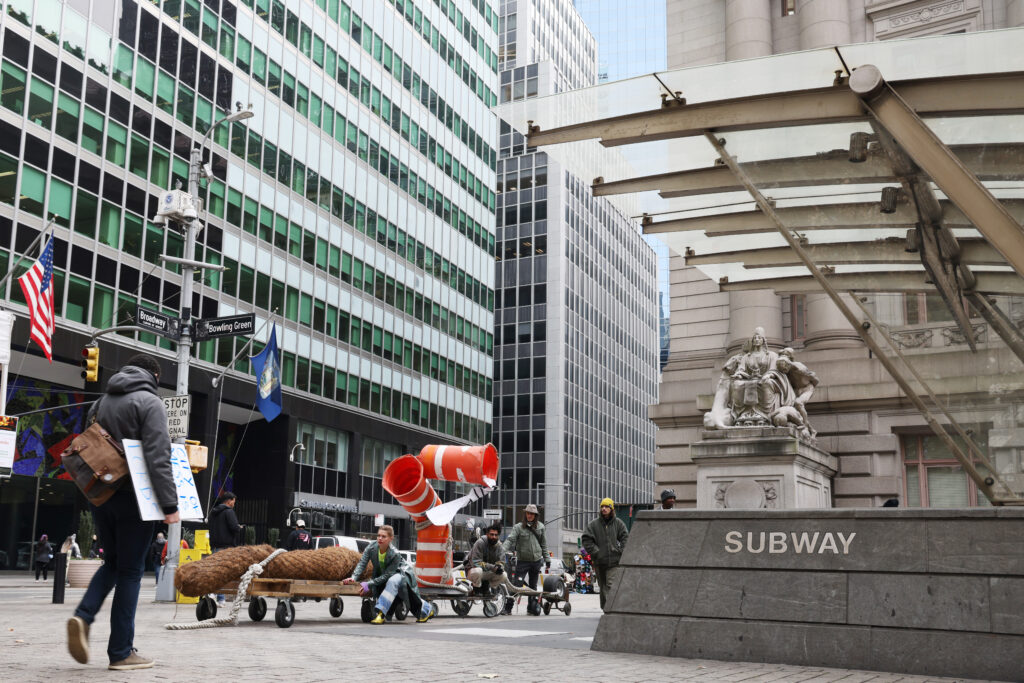
Type: Public Architecture, mobile installation, performance
Location: Governors Island, Institute of Public Architecture, New York, 2024
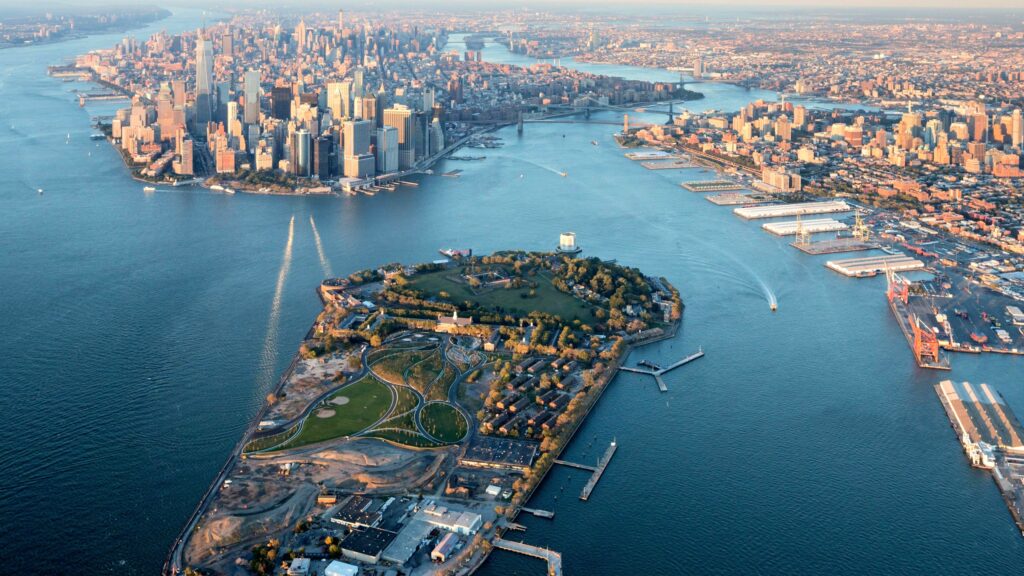
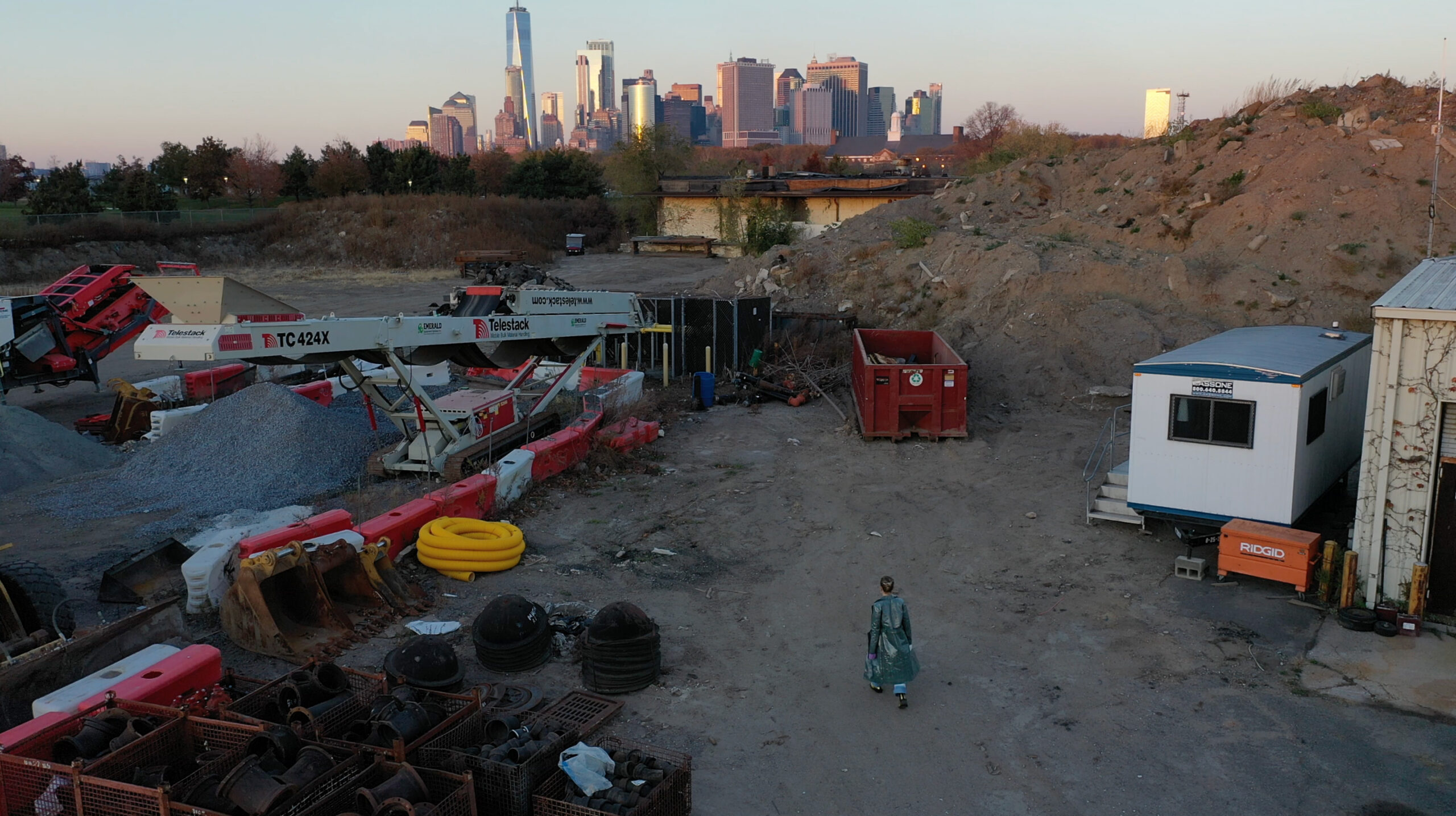
In the midst of the 2024 U.S. elections, Lesia spent three months on Governors Island — an often-overlooked place that has long served as an extension of New York's power. From this tranquil vantage point across the water from Manhattan, she worked closely with activists and engaged with the island's layered histories. These reflections became the foundation of The Governing Island: a mobile installation and performance during election days that provokes a critical discussion about civil agency, ownership, and the values that define our cities.
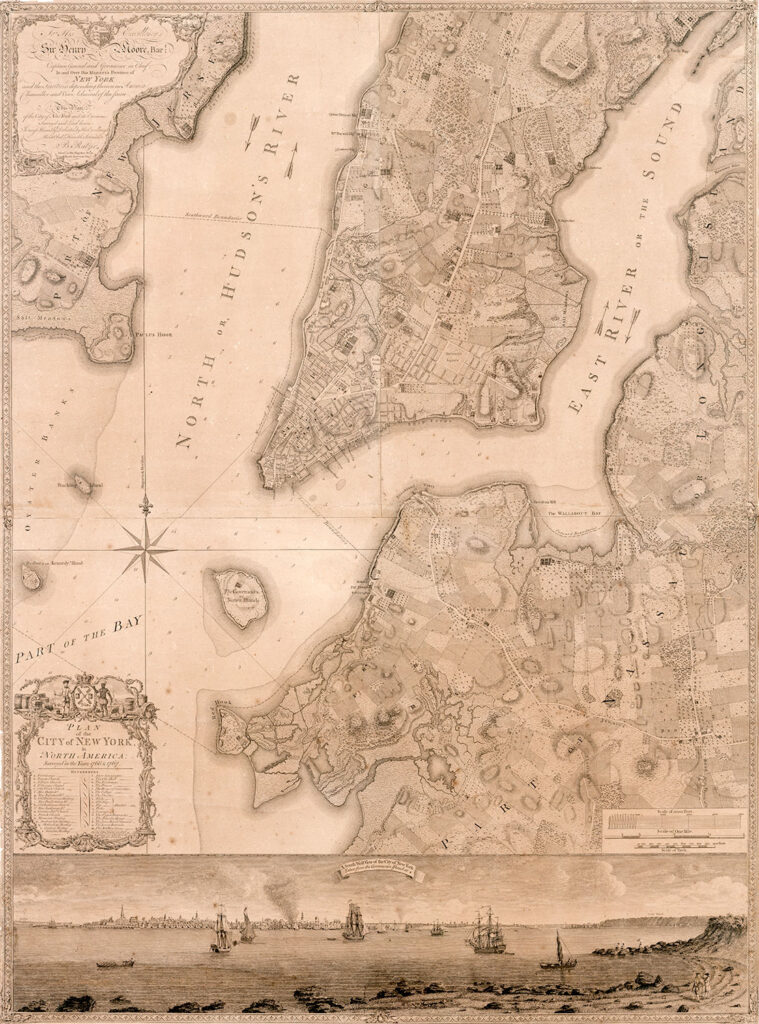
In 1637, the Dutch controversially purchased Governors Island from the Lenape — the Indigenous people of what is now New York City — in exchange for beads, nails, and two axe heads. The agreement likely represented a temporary use permit rather than a permanent land transfer. The Lenape were forcibly removed from their ancestral territory while Manhattan emerged as a symbol of capitalist expansion, built on the geological and political forces that still define it.
Governors Island has since moved from Indigenous foraging ground to colonial outpost, military stronghold, and now a "sustainability hub" — each transformation reflecting Manhattan's dependence on the territories that surround and sustain it. As the U.S. stood at a political crossroads in 2024, the forces that have always shaped this island — control, ownership, power — were once again in play.
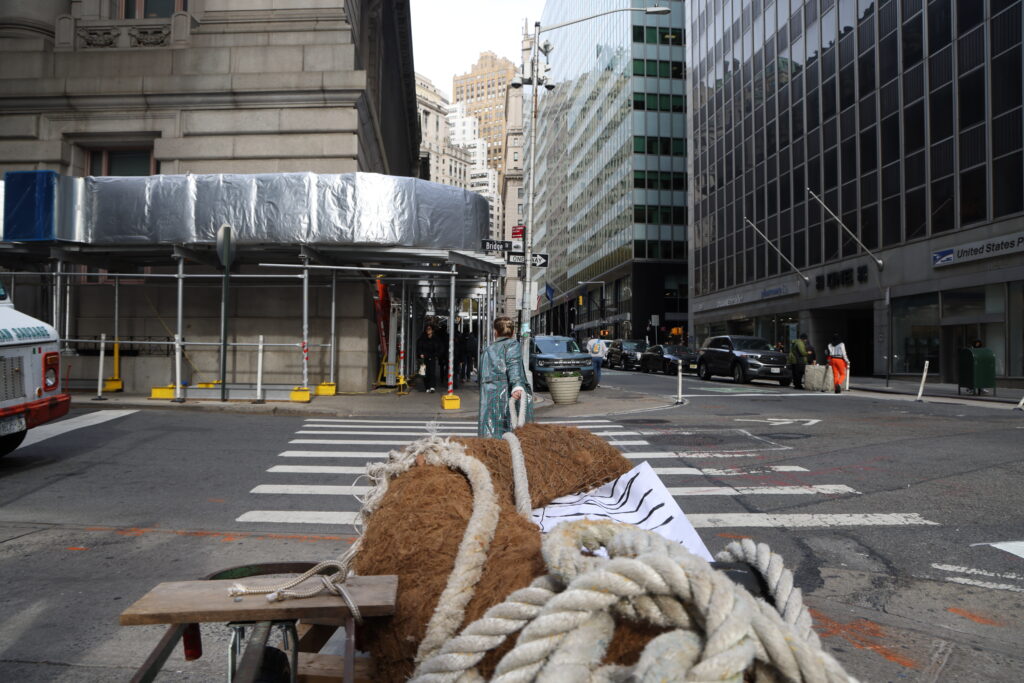
The Governing Island imagines a moment of reversal: a day when Governors Island occupies Manhattan — not to extend its control, but to restore the values that existed before its sale to the Dutch.
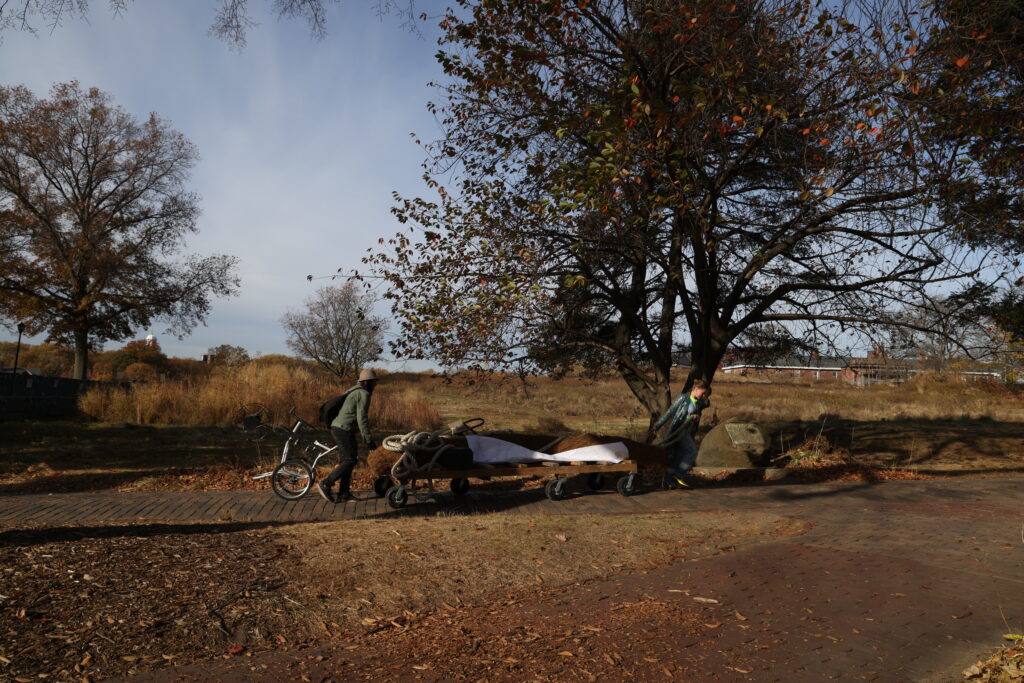
At the heart of the intervention are the characters — sculptural forms made from materials sourced directly from the island, physical remnants of its evolving landscape. Connected like beads, they become modern treasures, reflecting contemporary political and social shifts. In collaboration with environmental activists, these characters travel to Manhattan as a mobile installation, the island symbolically reclaiming space, governance, and identity.
Moving through the city, The Governing Island disrupts Manhattan's habitual flow and challenges assumptions of ownership. In a metropolis where regulation appears fixed, the installation reveals the fluidity of law and the imaginative space within it — opening a temporary gap in the city's structured order where new forms of agency can be envisioned.
The act of moving through the city becomes an act of governance.
Here, Governors Island becomes Governing.